Last week I wrote about light buyers, buyer personas, and why THON, Penn State's $18 million student-run philanthropy, works for the same reasons the biggest brands in the world work. I got a lot of great responses, and I sincerely appreciate it.
One response in particular stood out. A reader forwarded the issue to several colleagues in the nonprofit space with this note:
"[Patrick's] central point is that enduring support is not built only by speaking to your most passionate, already-committed donors, volunteers, or advocates. The bigger opportunity is to make your mission easy, visible, welcoming, and rewarding for the many people who may want to participate in lighter but still meaningful ways. For nonprofits, this is a powerful reminder: loyalty grows when people feel invited in at a level that fits their lives, when involvement gives them connection and purpose, and when the organization becomes part of their habits and identity over time."
I could not have said it better myself. But there's one word in there I keep coming back to: habits.
There's a concept from marketing science that explains why habits matter more than most people realize. I'm going to call it the Customer Demand Curve, because its real name is the "negative binomial distribution," and I'm fairly confident that term has never once made someone lean forward in their chair.
In the last issue, I shared a chart showing how Coca-Cola's customers are distributed by purchase frequency:
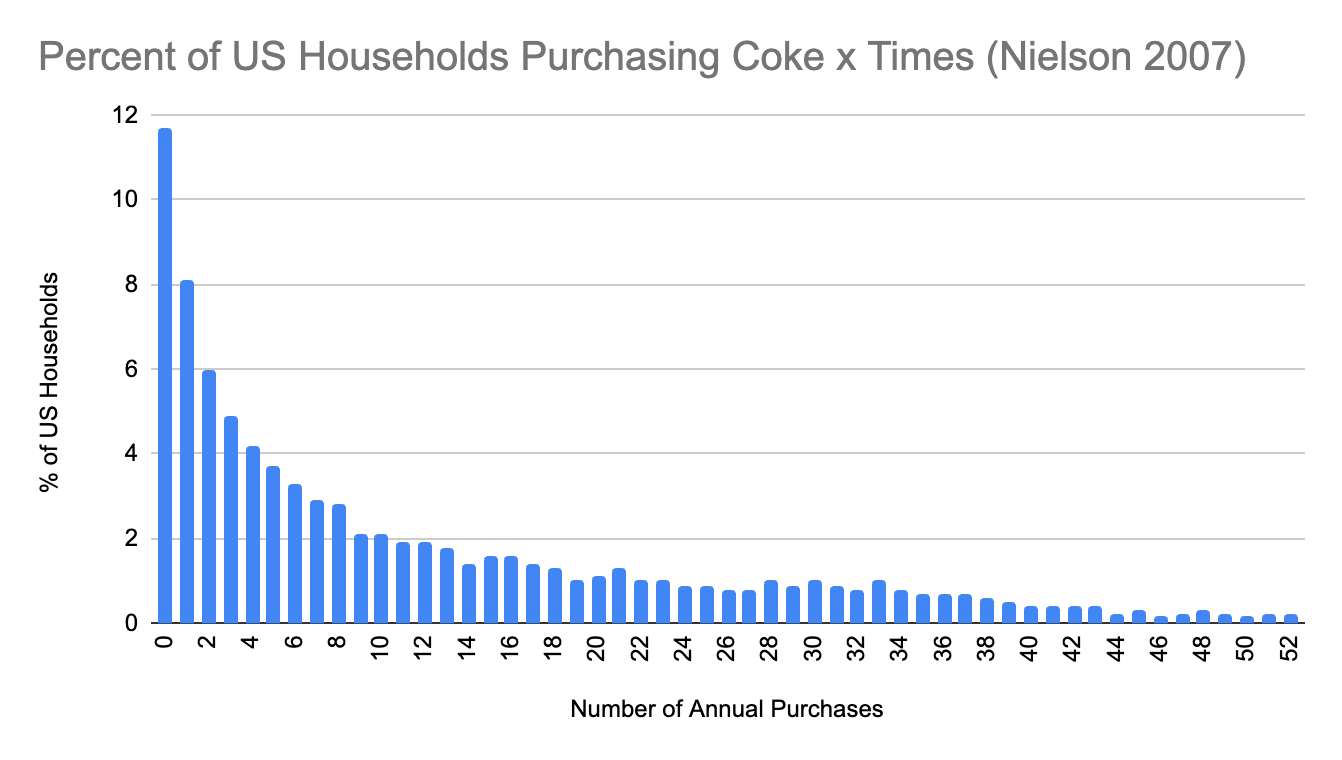
More than half of Coke customers buy between one and two cans per year. As purchase frequency increases, the number of customers drops toward a long tail. A tiny handful buy Coke dozens of times a year, but they're the extreme outliers.
According to this data, the average Coca-Cola buyer purchases 12 times a year. About once a month. That sounds perfectly reasonable.
But the average Coke buyer is not typical.
Look at the chart again. Roughly 60% of Coke customers buy six or fewer times per year. That "average" of 12 is dragged upward by a small number of heavy buyers on the long tail. In my book, I introduced you to my colleague Ronnie, who is such a loyal Coke drinker that if a restaurant only offers Pepsi, he just orders a water ... and will likely not return to that restaurant. Ronnie is not typical. Or normal.
Averages are misleading, and often the reason marketing strategies fail. The place where it's most dangerous: calculating and forecasting lifetime value.
Imagine you started a subscription business providing virtual yoga classes for people with lower back pain. Your first marketing campaigns will be hyper-focused on the very bottom of the funnel: perhaps a Google Ads campaign targeting the keyword "yoga course for back pain."
People searching for this are your best audience: chronic back pain, already familiar with yoga, looking for a structured program. This kind of customer converts quickly and stays for years.
But you'll quickly tap out that buyer persona. As you scale, your marketing has to expand toward lighter buyers: people with chronic back pain who have never tried yoga before, or people who already do yoga but didn't know specialized classes for back pain existed. Or people who would typically do these exercises in a studio, but are considering a virtual at-home program.
Eventually, you'll be showing Instagram ads to people who just threw out their back and would be willing to try anything because they're desperate.
I share this example for a specific reason. I was that last person.
In February of 2022, about two and a half months before my wedding, I threw out my back. I had never done yoga. Never had back issues. But as I was laying on the ground one afternoon, wondering if I'd be able to remain upright at my own wedding, I saw an Instagram ad for a "yoga for back pain" subscription. I signed up on the spot. And it was awesome! I completely credit that service with the fact that I recovered in time for my wedding.
Thankfully, I didn't need it forever. I cancelled after three months.
I'm sure there are active subscribers who have been paying for five years or more. But I needed three months and that was it. I was a textbook light buyer. And their addressable market has far more pathetic saps like me, who had never given yoga much thought but are willing to try anything to get back on their feet, than people who fit the bottom-funnel buyer persona.
If this brand acquired a lot of customers, they'd have a lot of people who cancel after three months, and a few people who stay forever, and a smattering of folks in between. That can still be a very great (and profitable) business!
But you also might find that the average retention is... I don't know... 24 months. That doesn't really tell you anything helpful though, does it?
Now consider what happens if they use their "average customer lifetime value" to model what they can afford to pay to acquire new customers. The long-tail heavy buyers, the ones who've been subscribed for years, skew the average way up. If their model suggests the average customer retains for 24 months, when the vast majority only need three, they'd overspend on every ad, assuming each new customer will stick around long enough to justify the cost.
This is the exact mistake many brands made who "grew up" during the digital arbitrage era of the 2010s. Blue Apron is a classic example. Before filing for IPO in 2017, the meal-delivery subscription company shared data suggesting that their marketing efforts were acquiring new customers at $463 each. But their S-1 argued this wasn't a problem, because while they only recoup $410 in revenue within six months, they make more than $900 from customers who stick around three years!
You don't need to be an expert on the meal delivery industry to realize that the unit economics do not add up. I don't care if your first 1,000 customers have been loyal for multiple years. Most customers of any subscription business are not sticking around that long.
As they grew, investing heavily in Facebook Ads and direct mail, it became clear that more than 60% of customers cancelled after their first month. 72% were gone by six months. Only 18% were retained for a full year.
It was never feasible for them to spend $463 per new customer.
Blue Apron's stock lost 99% of its value within two years. It was eventually delisted and sold off to Wonder Group.
If you rely on averages without understanding the curve underneath them, this is the trap you fall into.
This might make you wonder: if most of my customers are light buyers, and I can't rely on averages to model their value, what's the point of marketing to them at all?
This is where it gets counterintuitive.
Heavy buyers are already buying as much as they're likely to. They're less responsive to advertising, less swayed by promotions, and less likely to change their behavior.
Light buyers are the opposite. They represent 40 to 50 percent of a brand's total revenue (research from the Ehrenberg-Bass Institute confirms this across hundreds of categories), and they're the customers whose behavior your marketing can actually influence.
Here's how to think about it. For the average Coke drinker, there's roughly a 1-in-300 chance they'll buy a Coke on any given day. Over a year, that probability adds up to about one purchase. Coca-Cola spends billions on advertising not to make everyone crave Coke daily, but to nudge that probability from 1-in-300 to slightly more than 1-in-300. If they pushed it all the way to 2-in-300, they'd double their revenue! And most consumers would never notice the change in their own behavior.
That's how advertising actually works. Not as a conversion mechanism, but as a probability nudge applied to millions of people. And the people most receptive to that nudge are light buyers, not heavy ones, because heavy buyers are already at or near their ceiling.
But here's the part most people miss. Reaching more light buyers doesn't just increase revenue. It changes the shape of the entire curve.
Let's say your brand has 100 customers and the distribution looks like a typical customer demand curve: most customers buy once or twice, a smaller number buy more frequently, and a tiny handful are heavy, habitual buyers.
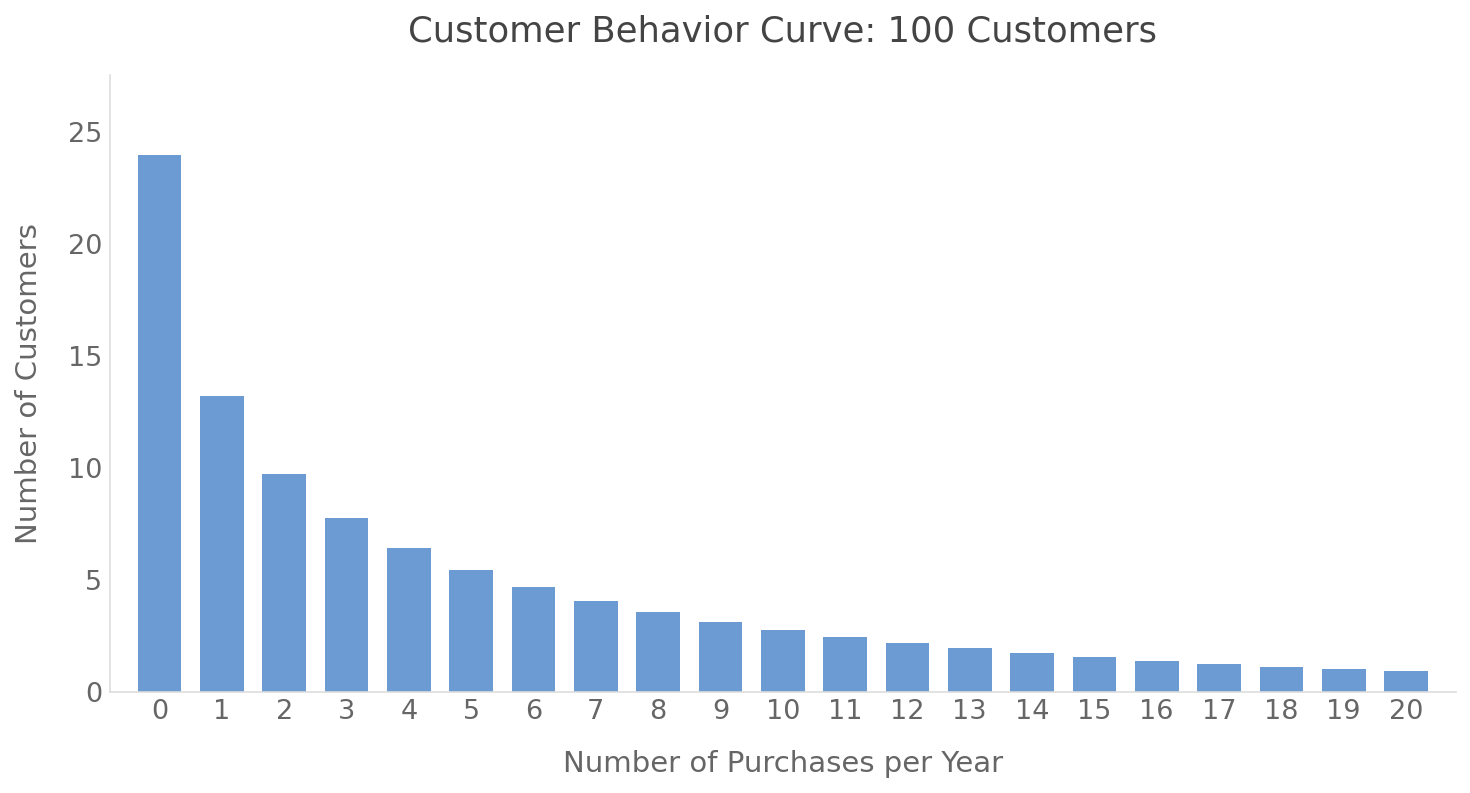
Now imagine that marketing helped you increase your total number of customers by 50%. What happens?
You don't just add 50 more one-time buyers to the left side of the chart. The entire curve shifts up and to the right. The head gets taller, yes, because you're acquiring more light buyers. But the tail also gets longer. You're essentially rolling the dice more times. A small percentage of those new customers will become heavy buyers. The absolute number of heavy buyers increases, even if they still represent a small proportion of the total.
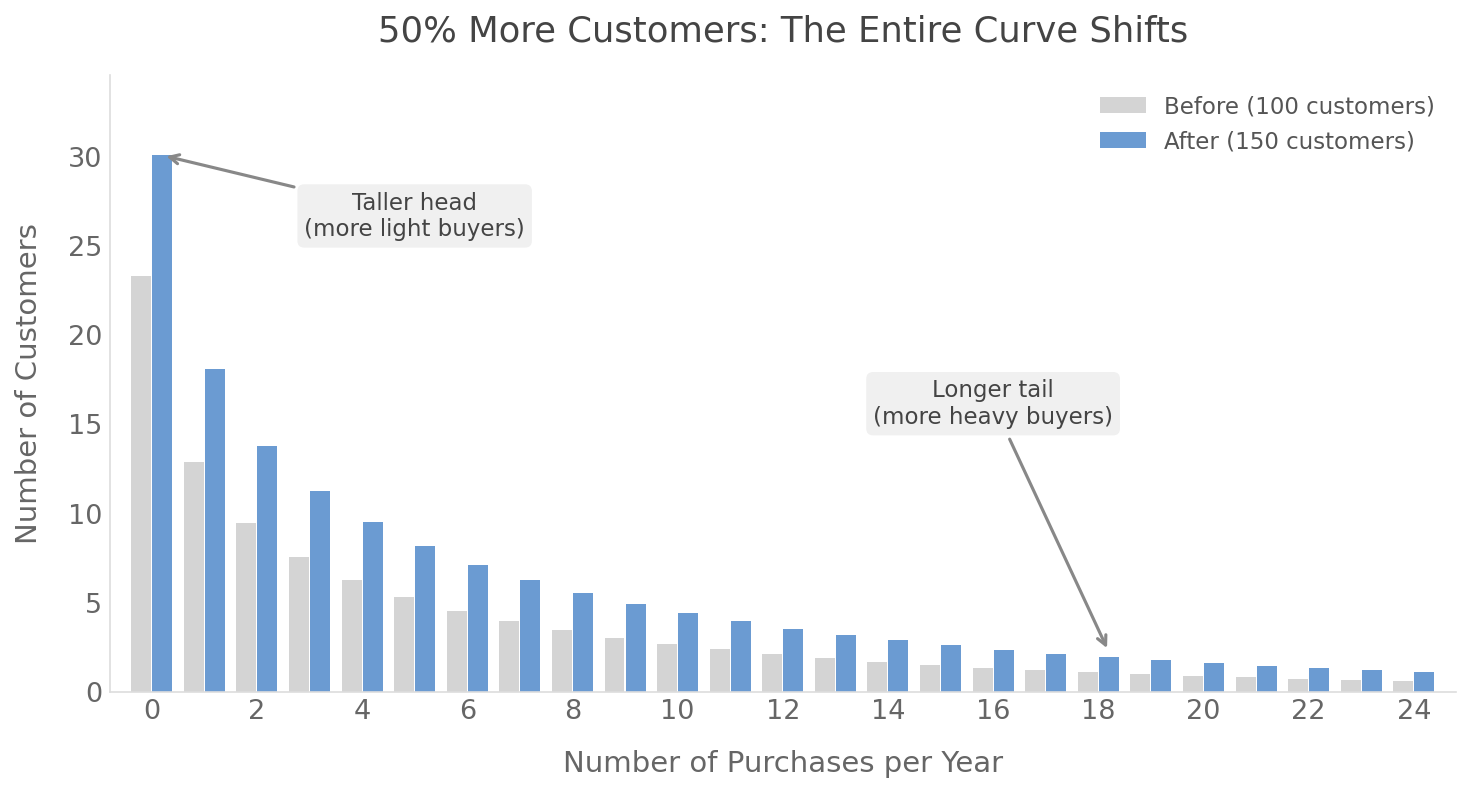
This is how brands actually grow loyalty over time. Not by convincing existing customers to buy more, but by growing the customer base so that long-tail outliers accumulate and pull up the averages. Your heaviest buyers, even though they only represent a small percent of the total, are growing in absolute numbers with every new cohort of customers you acquire.
Growth feeds loyalty. Not the other way around.
Which brings us back to that word from the opening: habits.
We tend to think of brand loyalty as an emotional commitment. The brands we're "loyal" to must be the ones we love, the ones we've deliberately chosen after evaluating the alternatives.
That's not what the data shows.
I buy the same coffee creamer every couple of weeks. To be totally honest, I can't even tell you the name of it. I know what the carton looks like. I know where it sits on the shelf. But if you asked me the brand name right now, I'd have to check my fridge.
That's habitual loyalty. I'm not choosing this creamer because I've evaluated all the alternatives and determined it's the best one. I'm choosing it because it's there, it's familiar, and thinking about coffee creamer is not something I'm interested in dedicating brainpower to.
Very few consumers are emotionally loyal in the way marketers imagine. The kind of person who would drive to a different store, pay a premium, or wait for a backorder just to get their preferred brand. Those people exist. But they are the extreme outliers. For most of us, most of the time, loyalty is a habit. Not a conviction.
And that's not a bad thing. It's the most important thing.
Because if loyalty is a habit, then building loyalty isn't about making customers feel something. It's about making your brand easy to notice, easy to remember, and easy to buy: mental availability and physical availability. It's about showing up consistently so that when the moment of decision arrives, choosing you is the path of least resistance.
The reader who forwarded last week's newsletter to his nonprofit colleagues understood this instinctively. Loyalty grows when people feel invited in at a level that fits their lives. Not because you convinced them your cause was the most important one. Not because your messaging was more emotional or your story more compelling. But because you were there, you were easy, and choosing you became a habit they didn't have to think about.
That's how THON raised $18 million last year alone. That's how Coca-Cola sells billions of cans to people who only buy one a year. And it's how the brands that understand the customer demand curve will outlast the ones still chasing their heaviest buyers.
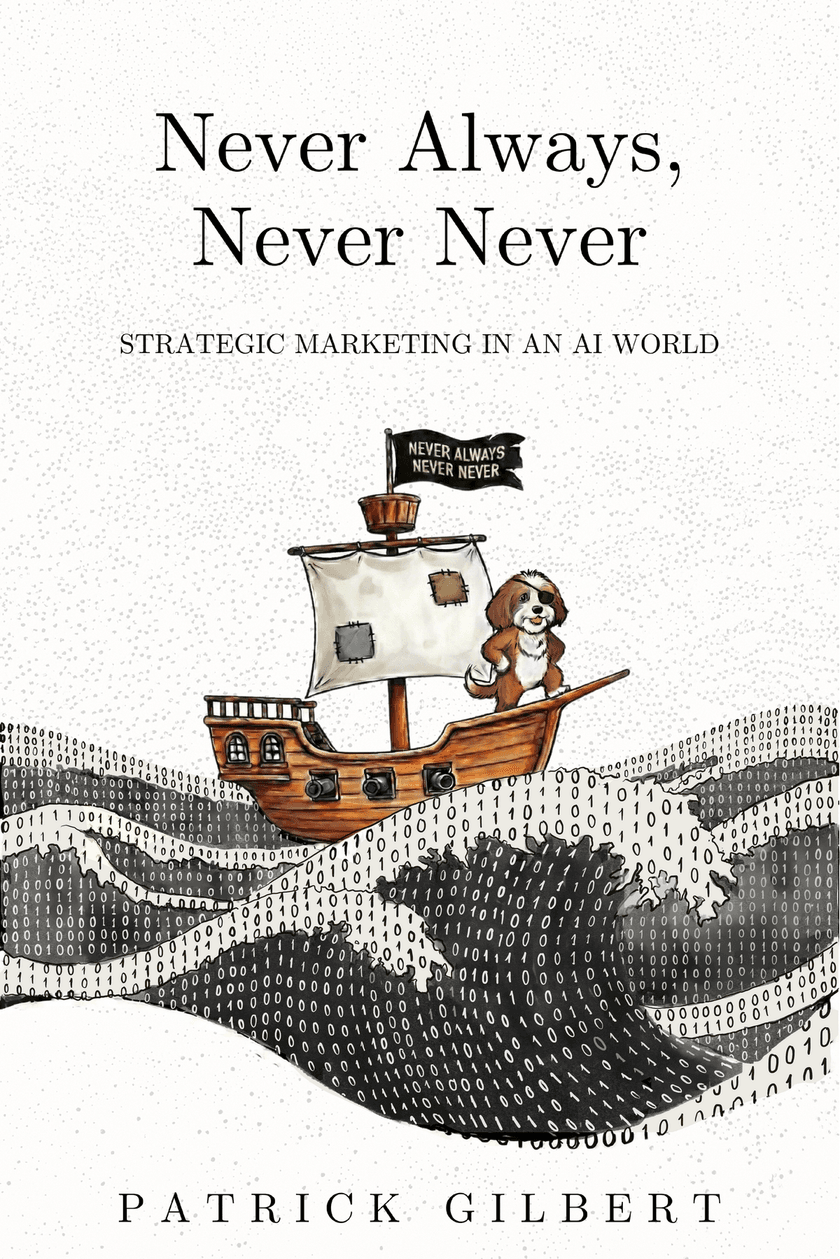
This issue expanded on concepts from Chapters 8 and 9 of Never Always, Never Never. If the customer demand curve shifted how you think about your own business, the book goes much deeper.